The Consciousness Atlas is an interactive web app that visualizes more
than 450 theories of consciousness. It is based on Robert Lawrence
Kuhn's 2024 paper,
"A Landscape of Consciousness". The Atlas maps theories that address phenomenal consciousness - the
subjective feel of experience, such as the redness of red.
What the Atlas is
The Atlas is a visual reference built on Kuhn's taxonomy. It presents
the full set of theories at once so you can explore the field visually
and open any theory to read its entry, like an encyclopedia with
structured entries. Each theory entry shows a concise identity line,
conceptual ground, suggested mechanism, empirical notes, implications,
and sources.
Why this exists
Consciousness is studied across disciplines - neuroscience,
philosophy, and sometimes spiritual or anomalous-state research.
Kuhn's paper collects and organizes hundreds of theories along a
spectrum from most physical to least physical. The Atlas puts that
organization into a visual form so readers, students, and researchers
can quickly see how different positions relate and where each theory
sits on the spectrum.
How it works
Theories are grouped into eleven main categories, arranged from physical to nonphysical: Materialism, Non-Reductive Physicalism, Quantum and Dimensions, Information, Panpsychism, Neutral Monism, Dualism, Idealism, Phenomenology, Anomalous States, and Challenge Theories. The app shows the whole map at once. Click any theory to read its structured entry, which includes references to canonical sources and named thinkers.
Who it is for
- Students learning philosophy of mind and cognitive science
-
Researchers and lecturers looking for an at-a-glance comparative
resource
-
Journalists and writers who need a quick reference to the range of
positions
-
Curious readers who want a clear view of what people mean when they
talk about consciousness
What the Atlas does not do
The Atlas does not endorse or rank theories. It is a visualization and
reference based on Kuhn's taxonomy - collect and present, not judge.
It does not attempt to settle the hard problem of consciousness. It is
a tool for exploration and comparison.
A note from Kuhn
Kuhn explicitly states the project's purpose: "collect and categorize,
not assess and adjudicate." The Consciousness Atlas follows that
approach. The data and structure are derived from Kuhn's paper;
feedback and suggested corrections are welcome, but the app is a
visualization layer on top of Kuhn's work.
Kuhn was not involved in the design or content of the Consciousness
Atlas, other than his original paper, 'A Landscape of Consciousness,'
which is the sole source.
FAQ
What is phenomenal consciousness?
Phenomenal consciousness refers to subjective experience - the
qualitative feel of being aware, like the taste of coffee or the
redness of red.
How many theories does the Atlas include?
The Atlas visualizes more than 450 individual theories, grouped into eleven broad categories.
Does the Atlas show which theory is true?
No. The Atlas presents theories neutrally. It is a map, not an
argument for any single position.
Is the Atlas academic?
The Atlas is based on an academic source - Robert Kuhn's 2024 paper,
"A Landscape of Consciousness" - and links to canonical sources
where available.
Summary
The Consciousness Atlas is a straightforward visualization tool: it
presents Kuhn's taxonomy as a single, explorable map and lets users
open individual theory entries to read structured, referenced
summaries. It is designed to make this complex field easier to survey
and to serve as a practical reference.
Koch’s Consciousness does not Depend on Language Theory
Materialism › Language
Consciousness is independent of language
This theory asserts that phenomenal consciousness, or basic inner experience, is functionally independent of language capacity. It is supported by clinical cases where language ability is severely impaired or lost, yet fundamental awareness is retained, leading to the conclusion that basic sentience is a widespread property shared with many non-linguistic animals.
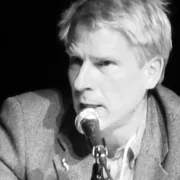 Christof Koch
What consciousness is
Consciousness is identified as a physical/biological phenomenon in the brain whose fundamental mechanism is distinct from, and independent of, symbolic language processing.
Mind and body
Mind (basic phenomenal consciousness) is tied to the physical brain processes, which are separate from linguistic processes.
Mechanism
The principle of dissociation, where the neural substrate necessary and sufficient for consciousness (NCC) is distinct from the neural correlates of language.
Core claims
- Consciousness does not depend on language.
- Clinical cases of brain insult demonstrate that consciousness is retained when language is lost.
- Sentience is shared with all mammals, rejecting the anthropocentric view that only humans experience anything.
Implications
- AI consciousness: Conditional
- Since language is not necessary for consciousness, AI's linguistic capability (LLMs) is irrelevant. AI consciousness depends entirely on whether the necessary non-linguistic physical substrate can be replicated in artificial systems.
- Survival beyond death: No
- Consistent with its materialist categorization, consciousness is tied to a physical substrate (the brain) and cannot persist after biological death.
- Meaning and purpose: Humanistic only
- Consciousness enables the self to function as a narrative center via language, allowing for human-created meaning, but the underlying material reality suggests no ultimate cosmic purpose.
- Virtual immortality: Conditional
- If consciousness is decoupled from language, the focus shifts entirely to duplicating the non-linguistic, physical substrate of basic awareness. If this specific non-linguistic neural structure can be duplicated, virtual immortality is possible.
Related theories
Sources
- The Feeling of Life Itself: Why Consciousness is Widespread but Can’t Be Computed (2019)
- Consciousness doesn’t depend on language, Christof Koch (2019)
Explore all theories on the Consciousness Atlas · Compare Koch’s Consciousness does not Depend on Language Theory with other theories · Which theory of consciousness fits you?
