
Polkinghorne’s Dual-Aspect Monism
Monism › Dual-Aspect Monism
Mind and Matter as Complementary Aspects of a Unitary Being
This theory posits that matter and mind are complementary aspects of a single unitary being (psychosomatic nature), rejecting classical dualism and materialism. The mind, or soul, is conceived as an information-bearing pattern organized by the physical brain. This view is often framed within a Christian theological context to accommodate the continuity of personal identity necessary for the resurrection of the dead.
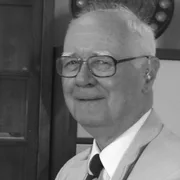 John Polkinghorne
What consciousness is
The mind/soul is identified as the information-bearing pattern (or organizational structure) of the body/brain, while matter and mind are fundamentally complementary aspects of a unitary underlying reality.
Mind and body
Mind and matter are complementary aspects of a unitary being (psychosomatic unity), avoiding the sharp division of dualism. The physical systems afford non-reductive mental properties, with the mind acting as an information pattern carried by the brain.
Mechanism
The mind’s essence is the 'information-bearing pattern' of the physical system. This pattern exerts genuine causal force through top-down causality facilitated by intrinsic unpredictabilities in complex physical systems (dissipative systems in complexity theory).
Core claims
- Matter and mind are complementary aspects of a single unitary being.
- The soul is the unique, information-bearing pattern of the body, distinct from its material constituents.
- Mind exerts causal influence through top-down causality, leveraging complexity and unpredictability in physical systems.
- The continuity of the person (the 'real me') is carried by this information-bearing pattern.
Criticisms
Polkinghorne rejects the charge that dual-aspect monism is a subtle materialism (epiphenomenalism). Critics argue that a simple pattern of information is insufficient to guarantee unique personal identity for reconstitution or resurrection (the problem of duplicates).
Implications
- AI consciousness: Likely
- If consciousness is primarily an emergent pattern of information organized by a complex system, artificial systems of sufficient complexity and organization should theoretically be able to host this pattern and become conscious.
- Survival beyond death: Conditional
- The essence of the person (the unique information-bearing pattern/soul) is maintained by 'divine memory' after death and will be reconstituted in a new form of matter at the resurrection, ensuring continuity.
- Meaning and purpose: Cosmic/Ultimate
- The theory is motivated by finding a coherent account of human existence within a reality that allows for resurrection, implying ultimate purpose and value tied to divine intention and destiny.
- Virtual immortality: Conditional
- Virtual immortality is theoretically possible because the essential self is defined as an information-bearing pattern. Uploading this pattern to non-biological media would preserve the necessary identity component, provided the replication is perfect and the pattern is the sole element needed for 'me' to persist.
Related theories
- Teilhard de Chardin's Evolving Consciousness (Overlap (Shares Dual-Aspect Monism and evolutionary/teleological framework))
- Atmanspacher's Dual-Aspect Monism (Compatible (Shares commitment to dual-aspect view of unitary reality))
- van Inwagen's Christian Materialism and Resurrection of the Dead (Overlap (Addresses the theological necessity for personal identity continuity despite physical dissolution))
Sources
- Mind and matter: a physicist’s view (2009)
- The God of Hope and the End of the World (2003)
- Faith, Science and Understanding (2001)
- All things new (Closer To Truth) (2007)
Explore all theories on the Consciousness Atlas · Compare Polkinghorne’s Dual-Aspect Monism with other theories · Which theory of consciousness fits you?