
Kauffman’s Mind Mediating Possibles to Actuals
Quantum › Quantum
Mind Mediating Possibles to Actuals via Quantum Measurement
This theory posits that consciousness is partly quantum and acts as a necessary component to mediate the conversion of ontologically real Possibles (Res potentia) into Actuals (Res extensa) via quantum measurement. This mechanism is necessary because purely classical physics cannot account for the role of mind in collapsing the wave function, which is required to circumvent the causal closure of classical physics.
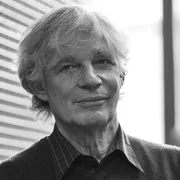 Stuart Kauffman
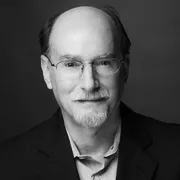 Dean Radin
 Andrea Roli
What consciousness is
Consciousness is identified as partly quantum, enabling the conversion of ontologically real Possibles (Res potentia) into Actuals (Res extensa) during quantum measurement. This function allows the brain/mind to accomplish goal-directed perception/action.
Mind and body
Consciousness entails a causal role (non-physical cause) in the physical world by converting Possibles to Actuals, necessitated by the failure of physical cause alone to perform this conversion and circumventing the causal closure of classical physics.
Mechanism
The mechanism is quantum measurement, where the brain/mind entangles with a vast superposition and then collapses the wave function, converting Res potentia into Res extensa.
Core claims
- Quantum measurement converts ontologically real Possibles (Res potentia) into ontologically real Actuals (Res extensa).
- The brain/mind must be partly quantum, as classical systems cannot analogously process 'possible uses'.
- Consciousness entangles with the world in superposition and collapses the wave function to produce qualia.
- The theory predicts nonlocal experiences (psi phenomena) where mind interacts with distant systems.
Criticisms
Like most quantum theories of consciousness, it is often dismissed by mainstream physicists and neuroscientists who do not take quantum consciousness seriously. It relies on a non-classical interpretation of quantum mechanics and metaphysical claims about potentia.
Implications
- AI consciousness: Yes
- If consciousness is rooted in quantum mechanics, AI consciousness should be possible if technology can manipulate and control the relevant quantum states comprehensively, though this remains technically challenging.
- Survival beyond death: Possible
- The theory suggests that some aspects of mind are non-local and can extend beyond the mind-brain system, providing a potentially plausible mechanism for survival after bodily death.
- Meaning and purpose: Uncertain
- By asserting consciousness as fundamental to reality (through potentia/actuals) and endowing it with a causal role, it steps away from the 'pointless' universe of strict materialism, implying a possible framework for ultimate meaning, though not explicitly defined.
- Virtual immortality: Likely
- If consciousness is quantum, virtual duplication is possible under predictable regularities, but the inherent indeterminacies and probabilistics of quantum physics introduce uncertainty and may undermine perfect duplicability required for virtual immortality.
Related theories
- Stapp's Collapsing the Wave Function via Asking "Questions" (Overlap)
- Penrose-Hameroff's Orchestrated Objective Reduction (Overlap)
- Heisenberg’s Potentia Interpretation (Influence)
- Classical Physics (Critique)
Sources
- Quantum aspects of the brain-mind relationship: a hypothesis with supporting evidence, S. Kauffman & D. Radin (2020)
- What is Consciousness?, S. Kauffman & A. Roli (2022)
- What are breakthroughs in science? (Part 3), S. Kauffman (2019)
- Physics and Philosophy: the Revolution in Modern Science, W. Heisenberg (1958)
Explore all theories on the Consciousness Atlas · Compare Kauffman’s Mind Mediating Possibles to Actuals with other theories · Which theory of consciousness fits you?