
Stapp’s Collapsing the Wave Function via Asking “Questions”
Quantum › Quantum Theories
‘Consciousness as Quantum Wave Function Collapse’
This theory posits that consciousness is fundamental to the universe and relies on a traditional interpretation of quantum mechanics where consciousness causes the collapse of the quantum wave function (an act of measurement) . This mechanism provides consciousness with a crucial causal role in the physical world, linking an agent's free choice to the physical actualization of neural correlates .
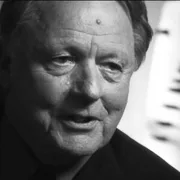 Henry Stapp
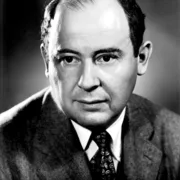 John von Neumann
What consciousness is
Consciousness is identified with the phenomenal aspects of "events" (quantum jumps) that occur when an observer chooses a specific measurement or "question" to ask, forcing the physical state to actualize in a manner compatible with the resulting phenomenal experience .
Mind and body
Causal dynamical linkage (Interactionist). A causal connection is established between a person's conscious choices of how to act (mind) and the physical actualizations of the neural correlates (matter) via the quantum jump .
Mechanism
Consciousness addresses the 'critical causal gap' in quantum mechanics by determining the choice of measurement ('question to ask'), which causes the wave function (potentialities) to collapse into an actual physical event .
Core claims
- The ontological foundations of consciousness and quantum mechanics are inextricably linked .
- Consciousness acts causally by choosing the question asked in a quantum mechanical system .
- The specific physical mechanism involves quantum effects (calcium ion wave packet spreading) at neural synapses (exocytosis) .
- Classical materialism is defeated by the necessity of conscious agency in quantum mechanics .
Criticisms
Criticized for relying on a non-standard interpretation of quantum mechanics (consciousness-induced collapse) that is widely dismissed in mainstream physics . The conclusions are highly controversial .
Implications
- AI consciousness: Uncertain
- Since consciousness is posited as an independent, fundamental existence necessary to force the quantum jump , duplicating the purely physical or computational processes of the brain in an AI might be insufficient to instantiate this fundamental agency.
- Survival beyond death: Uncertain
- The theory establishes consciousness as fundamental and inextricably linked to quantum reality , suggesting that the destruction of the classical brain does not necessarily entail the end of the fundamental conscious entity, though first-person survival remains difficult to imagine .
- Meaning and purpose: Uncertain
- The theory grants consciousness a vital causal role, transforming passive observation into active participation ('actors') in the universe, thereby providing an intrinsic function and meaning .
- Virtual immortality: No
- If consciousness is an independent, fundamental existence required to collapse the physical state , duplicating the purely physical/computational aspects of the brain would necessarily exclude this non-physical component required for true self-identity .
Related theories
- Von Neumann’s Quantum Formulation (Foundation/Influence)
- Penrose-Hameroff's Orchestrated Objective Reduction (Alternative Quantum Theory)
- Kauffman's Mind Mediating Possibles to Actuals (Overlap)
- Materialism (Critique/Defeated)
Sources
- Mindful Universe: Quantum Mechanics and the Participating Observer, Henry Stapp (2011)
- Quantum Approaches to Consciousness, Henry Stapp (2006)
- Mathematical Foundations of Quantum Mechanics, John von Neumann (1932)
Explore all theories on the Consciousness Atlas · Compare Stapp’s Collapsing the Wave Function via Asking “Questions” with other theories · Which theory of consciousness fits you?