
Rourk’s Catecholaminergic Neuron Electron Transport Theory
Quantum
Consciousness as the Selected Channel in Midbrain Electron Transport
Rourk proposes that phenomenal consciousness is associated with a quantum-biological signaling mechanism in the midbrain: electron transport through ferritin and neuromelanin linking dopamine neurons of the substantia nigra and norepinephrine neurons of the locus coeruleus. This mechanism acts as a switch that helps the basal ganglia select one integrated, salient action channel from many competing ones. It is a neural-correlate theory meant to add a binding and selection mechanism to Global Neuronal Workspace accounts, not a quantum metaphysics of mind.
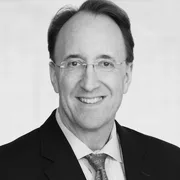 Christopher J. Rourk
What consciousness is
Phenomenal consciousness is associated with the cognitive or sensory channel that wins selection and gains energetic priority, becoming stabilized, integrated, and action-relevant.
Mind and body
Consciousness correlates with a specific signaling mechanism in identified neural tissue. Rourk does not claim that quantum mechanics explains subjectivity as such.
Mechanism
Catecholaminergic neuron electron transport (CNET): a switch-like mechanism that routes energy from less active channels to more active ones, so a single channel wins without runaway competition.
Core claims
- Conductive atomic-force microscopy reportedly indicated quantum-mechanical electron transport in human substantia nigra tissue rich in ferritin and neuromelanin, but not in nearby control tissue.
- Electron tunneling through ferritin particles has been experimentally observed.
- Striatal dopamine release is spatially and temporally precise enough to mediate action selection.
- Ferritin-rich oligodendrocyte precursor cells interconnect dopamine neurons in the substantia nigra, which Rourk reads as a possible route for the signaling CNET predicted.
Criticisms
The evidence shows electron transport in tissue samples, not that this transport selects conscious contents in a living brain. As a correlate theory it identifies where selection might happen without explaining why the selected channel is experienced.
Implications
- AI consciousness: Uncertain
- The theory ties consciousness to a specific biological substrate in the midbrain and does not address whether other substrates could play the same selecting role.
- Survival beyond death: Unlikely
- Since consciousness is associated with signaling in living neural tissue, nothing in the view supports its continuation after the brain dies.
Related theories
- Baars's and Dehaene's Global Workspace Theory (Extension)
- Merker’s Midbrain-Centered Reality Space (Overlap)
- Beck-Eccles's Quantum Processes in the Synapse (Overlap)
- Penrose-Hameroff's Orchestrated Objective Reduction (Contrast)
Sources
- Ferritin and Neuromelanin ‘Quantum Dot’ Array Structures in Dopamine Neurons of the Substantia Nigra Pars Compacta and Norepinephrine Neurons of the Locus Coeruleus, Christopher J. Rourk (2018)
- Indication of Quantum Mechanical Electron Transport in Human Substantia Nigra Tissue from Conductive Atomic Force Microscopy Analysis, Christopher J. Rourk (2019)
- The Bioelectric and Biomagnetic Properties of Ferritin, Christopher J. Rourk (2025)
- A Computational Model of Action Selection in the Basal Ganglia. I. A New Functional Anatomy, Kevin Gurney, Tony J. Prescott, and Peter Redgrave (2001)
Explore all theories on the Consciousness Atlas · Compare Rourk’s Catecholaminergic Neuron Electron Transport Theory with other theories · Which theory of consciousness fits you?